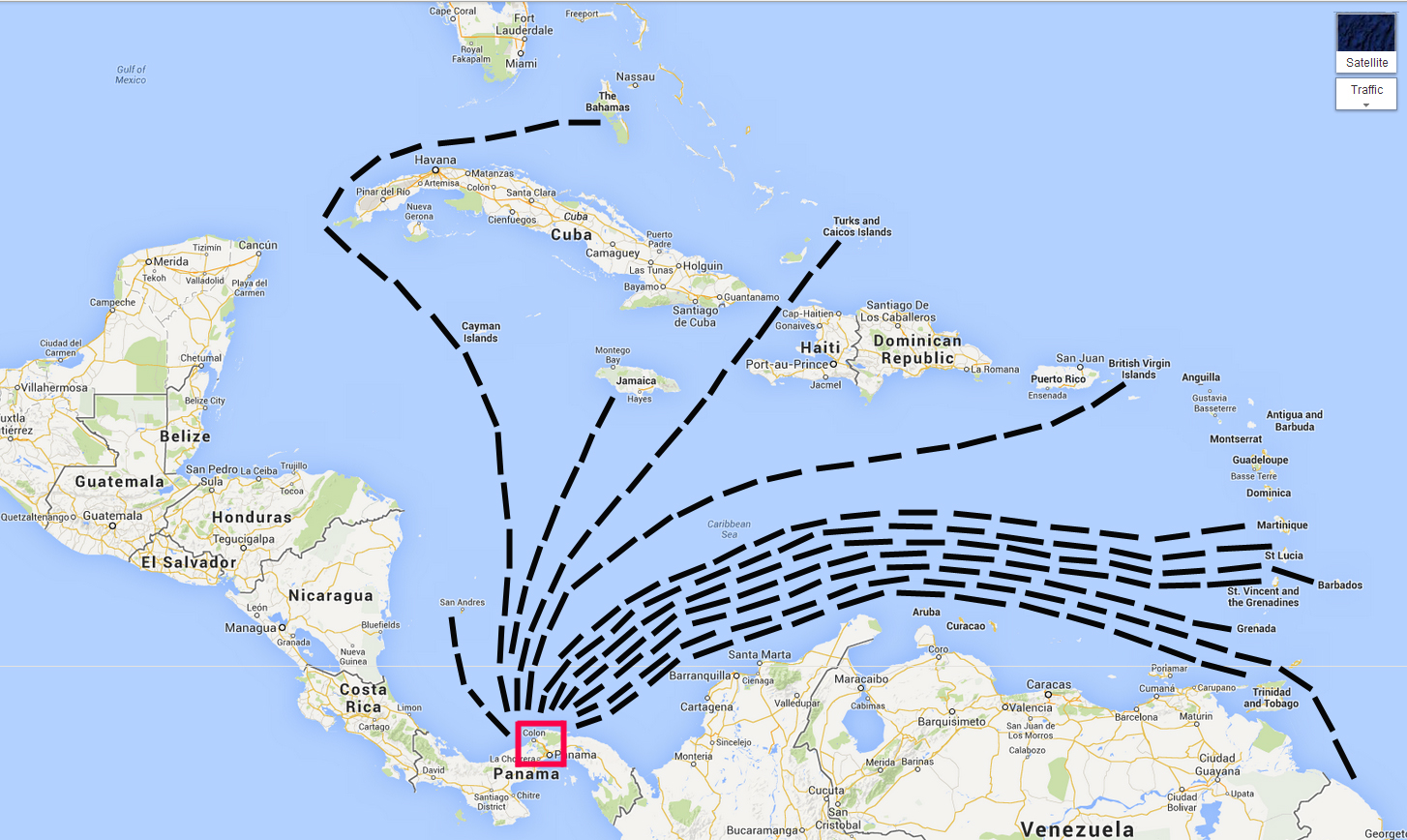
As the United States succeeded in its goal of Manifest Destiny, there soon came the need to connect the more industrialized east with the newly acquired west. The best way to do this was by using the Isthmus of Panama as a gateway between the two. Back in those days, ships were used as the main vehicle for transporting goods from one land to another. Therefore, two steamships were tasked with the movement of goods, one named the Falcon which serviced the Atlantic coast to the Chagres River area of Panama, and the other, the California which serviced the Pacific coast to Panama City.
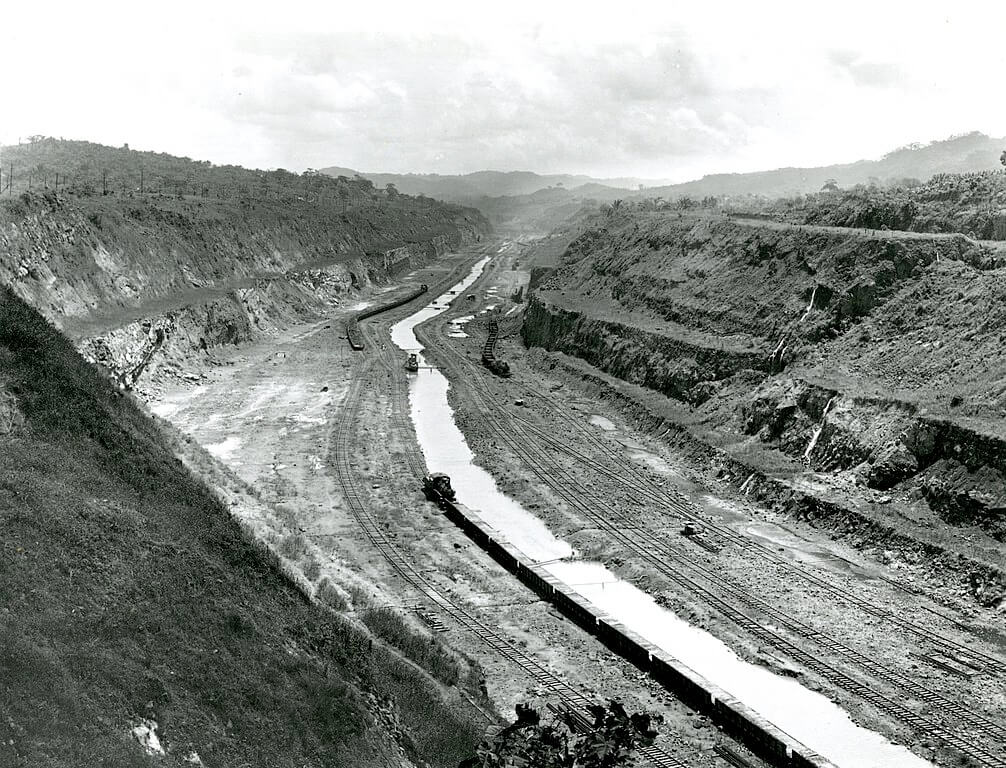
The quiet, run-down atmosphere of the Isthmus of Panama began to become a distant dream as the appearance of Panama began to change dramatically within a span of only four years. The appearance changed not only in infrastructure but also in the human setting. As ships rolled in, so too did foreigners from other lands who worked the ships. These newcomers did not understand the Panamanian culture and language so instead they mocked it. They mocked native costumes, customs, and religious expressions. In addition to differences, these foreigners brought along with them a cholera epidemic due to unsanitary conditions on the steamships.

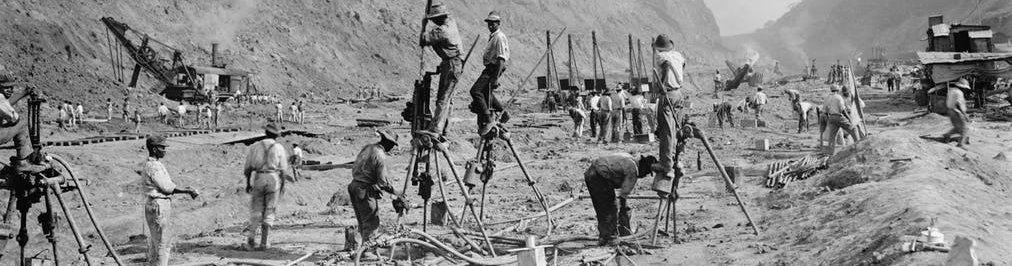
Soon enough, a railroad was needed and in 1849, the Pacific steamship company was tasked with developing the Panama Railroad which would, of course, require a workforce that Panama was unable to provide. Therefore a much larger influx of foreigners resulted. Initially, the railroad hired 1,000 Chinese laborers, who unfortunately did not work out due to illness, unhappiness, and other factors such as their addiction to opium. The next wave of laborers came from the West Indies who were acquired at a minimal fee. These laborers came from unfavorable situations in the West Indies where most were former slaves, farmers, and rural people who struggled in their home countries. They welcomed the change to work in the construction industry, leaving agriculture behind. Out of the 7,000 workers (all men) from various countries such as Ireland, India, France, Germany, Austria, Colombia, and Costa Rica, the West Indian laborers were the most adaptable to the climatic and working conditions.

As West Indian laborers were succeeding in their recruitment for work in Panama, they started to feel as if they could assimilate into Panamanian society. But as most were primarily black, this would not be the case as the government considered them the responsibility of the United States of America, not Panama. Their principal handicap was language. As they spoke English, it was not possible to send their kids to Panamanian public schools and they considered the school system as inferior to the British system which they were used to in their colonized islands of origin. As they were making more money as laborers in Panama than they could ever make in the West Indies, their primary focus was working to send back money to their respective families back home. Therefore rarely having close contact with the native Panamanian population.

By 1904, plans to build the Panama Canal were solidified, and once again, laborers were needed, mostly being requested from the West Indies after their first migration had proven to be a success in fulfilling the railroad’s construction. The purpose of the canal was to create a shortcut for multiple ships that greatly reduced the time for ships to travel between the Atlantic and Pacific oceans, enabling them to avoid the lengthy, hazardous route around the southernmost tip of South America and the even less popular route through the Arctic Archipelago and the Bering Strait. It would be one of the largest and most difficult engineering projects ever undertaken.
Jamaica would provide the most laborers, followed by Barbados, St. Lucia, and Martinique. In 1884, more than half of the 19,000 workers of the Panama Canal, were West Indian. Unfortunately, the French company who had financed the initial build of the Panama Canal scrapped the project, due to bad management and a cholera and yellow fever outbreak. Many laborers returned to their native countries, and others stayed in Panama, working for the railroad, farming along the railroad line, and becoming parts of rural communities.

Another Frenchman was able to acquire the railroad and canal and sold it to the United States for 40 million. With the backing of American support for their independence from Colombia, Panama agreed to approve the American acquisition. The Americans then moved forward with the 700 West Indians who were still under contract for the original canal. By 1910, there were 5,000 Europeans and 28,000 West Indians laborers working on the canal. The Americans, unlike the French, divided out how each would be supported as laborers on the canal. The American citizens were paid in gold, enjoyed comfortable housing and health care. The unskilled Europeans and West Indians were paid in silver, received second class health care, and did not have enough proper housing. When there was a bill introduced to Congress about supplying more housing for these “silver” laborers, the bill was buried because the Panamanian landlords were able to convince Congress that with the addition of housing came the loss in their revenue from the laborers’ rents.

In 1904 the Panamanian government allowed West Indians to become citizens. However, West Indian citizens were allowed only second best privileges. The education of the West Indian citizen was created to prepare children for local job openings catered only to the blacks. Schools for West Indian citizens did not provide professional training until 1946. West Indian children did not learn about the history of Panama, learning about the British system, even though they were in Panama.

Due to the imbalanced proportions of West Indian men to women most West Indian men had children with Panamanian women. About 71% of children were considered illegitimate. Less than 25% of marriages amongst West Indians were monogamous and only when men reached economic security did they then attempt to marry. Most West Indians did not take advantage of acquiring land as the Panamanian law had made available to West Indians. They preferred to live in the city, probably trying to move away and forget about their agricultural origins in the West Indies.
In addition to the external conflict that West Indians faced from native Panamanians, there was internal racial conflicts between the West Indians, most notably between the Barbadians, Jamaicans, and Trinidadians. Even though there were internal conflict between the West Indians, they were all referred to in one grouping as the “Antillanos”, a seemly second class citizen designation.

In the 1920s, the news media contributed to the Panamanian citizen’s resentment of the West Indians expressed in the following excerpt from the Panama Weekly in 1924:
“Are we going to stand aside and permit an inferior unassimilable foreign element that is objectionable from a sociological point of view, to take advantage of the few jobs that our native element could fulfill?”

As the building of the canal came to an end, 10,000 West Indian workers were laid off. About 50% found work in nearby banana plantations, while others remained out of work in the canal zone where English was spoken. During the 1920s and 1930s, the Panamanian government allowed West Indians to settle lands on the outskirts of the capital, Panama City. It was their way of hiding the West Indian presence in the city’s business centers. As Panama continued to grow economically as a service country and became more of a consumer of the American markets, the rate of unemployment in the canal zone rose considerably within the West Indian community as there was a surplus in once canal laborers with no available work for their “type”.
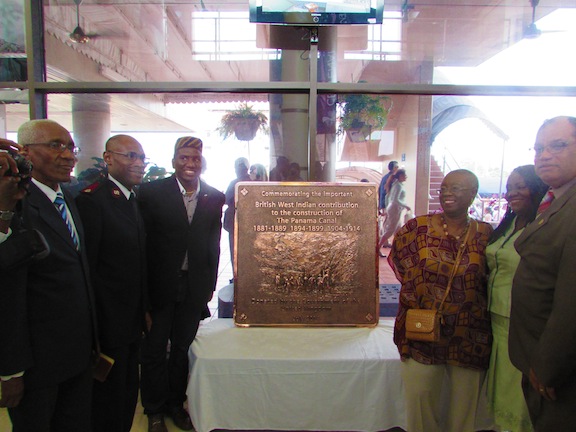
After the opening of the canal in 1914, nearly 20,000 West Indians remained in Panama. Native black Panamanians who were brought to Panama as former slaves in the old Spanish colonial past were all too familiar with life at the bottom of the social ladder but began to resent the West Indians, who they felt made things worse for them. However, fast forward to the 1960s as former West Indians had assimilated with other Afro-Panamanians, they were able organize themselves politically and gained more acceptance in a society that once casted them as outcasts as did other Pan-Africans around the globe.
Sources:
 Untold Stories of Histories Past
So interesting. Who knew. 👍
LikeLike