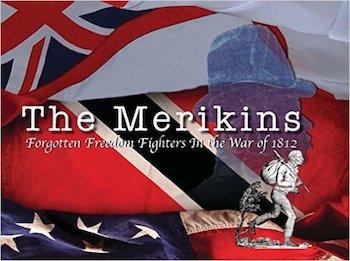
Have you ever heard of the Merikins? No, that was not a typo, I am not trying to spell the word “Americans”. Merikins were a group of former inhabitants of the United States who found refuge in a land that they could finally call their own. Until as of late, I had no idea who they were. Up until learning about the community of The Merikins, the only similar places I knew of were Nova Scotia and Philadelphia.
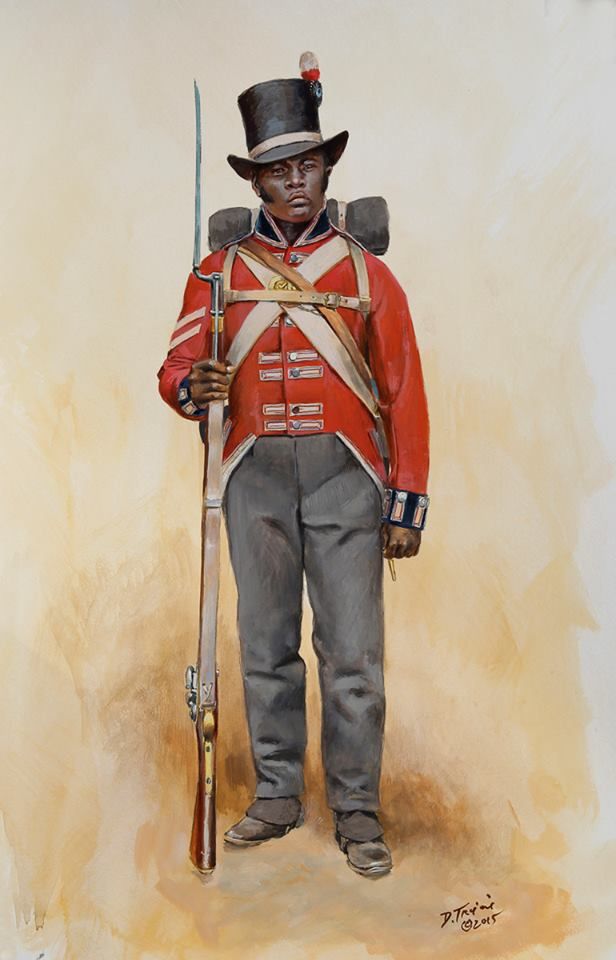
After the American Revolution, Great Britain became a United States adversary. There were several disagreements between the two nations that lead to the War of 1812. To some, it has been referred to as the second war of independence, as it resulted due to unfinished business. Similar to the American Revolution, the United States and Great Britain enlisted the help of blacks, freed and enslaved, into the military. The only branch that accepted the enlistment of blacks was the Navy on both sides. Unlike the American side, black slaves were promised freedom if they fought on the British side. They were able to join the Colonial Marines. Six companies of freedmen (slaves who joined) were recruited into the Corps of Colonial Marines along the Atlantic coast, from Chesapeake Bay to Georgia. Their presence alone inspired hatred and fear among Americans. The former black slaves were “infinitely more dreaded by the Americans than the British troops” and they believed the British King had come to free them, while the British saw the black marines as a source of fighting power to curb American expansion. After the British defeat in the war, the soldiers were temporarily settled in Bermuda where they were offered a choice of either serving in the West India Regiment or being settled as free men in a British colony. While there, Americans demanded the return of ex-slaves or monetary reparations for their loss of property. With few exceptions, the British refused. Sir Alexander Cochrane, on taking over the command of these British forces in 1814, issued a proclamation offering a choice of enlistment or resettlement:
… all who may be disposed to emigrate from the UNITED STATES will, with their Families, be received on board His Majesty’s Ships or Vessels of War, or at the Military Posts that may be established, upon or near the Coast of the UNITED STATES, when they will have their choice of either entering into His Majesty’s Sea or Land Forces, or of being sent as FREE Settlers to the British Possessions in North America or the West Indies, where they will meet with due encouragement …
Refusing to remain enlisted as soldiers fighting for a cause they didn’t care for, most chose freedom. Therefore, the Corps of Colonial Marines was disbanded and all newly freed marines were sent to two British colonies – Trinidad and Tobago in the West Indias and Halifax, Nova Scotia, Canada. As a result of this action, more than 4000 blacks were freed from slavery – the largest emancipation that took place in the U.S. until the Civil War.
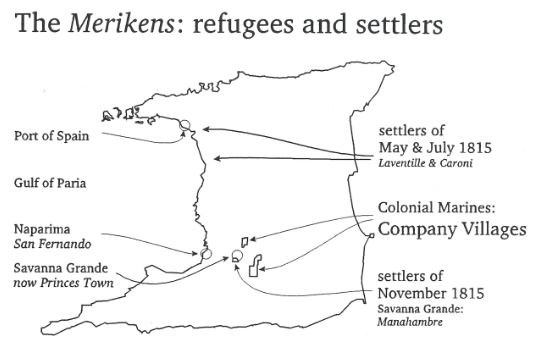
An estimated 761 marines took up the offer and came to Trinidad. They were granted 16 acres of land in six areas, later called the Company Villages, in South Trinidad, away from the enslaved population that had already inhabited the island. The village names were based on the naval companies in which they served as Colonial Marines. The Governor of Trinidad, Sir Ralph Woodford, wanted to increase the number of small farmers in that colony and arranged for the creation of a village for each company on the Naparima Plain near a former Spanish mission, La Misión de Savana Grande in the south of the island. Local planter Robert Mitchell managed the establishment and maintenance of the settlements, petitioning the governor for supplies when needed.
Within weeks of their arrival in Trinidad, protests from landowners in the Naparimas were sent to the Governor. He informed them later, “Naparima was the best place for them because of the superior fertility of the soil.” “Each company village was under the supervision of a sergeant or corporal, recruited to ensure proper discipline among the refugees.”The refugees, being former colonial marines, were well acquainted with severe corporal punishment, and this system was practiced during the early years of the company villages. To get the Merikins started, the government provided shelter, tools, and some cuttings and seeds for planting. Some individuals also received an outfit of clothes, a blanket, and for the first few weeks a daily ration of plantain and salt meat.
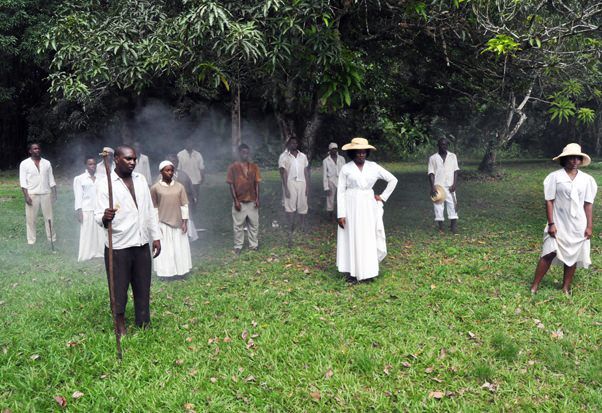
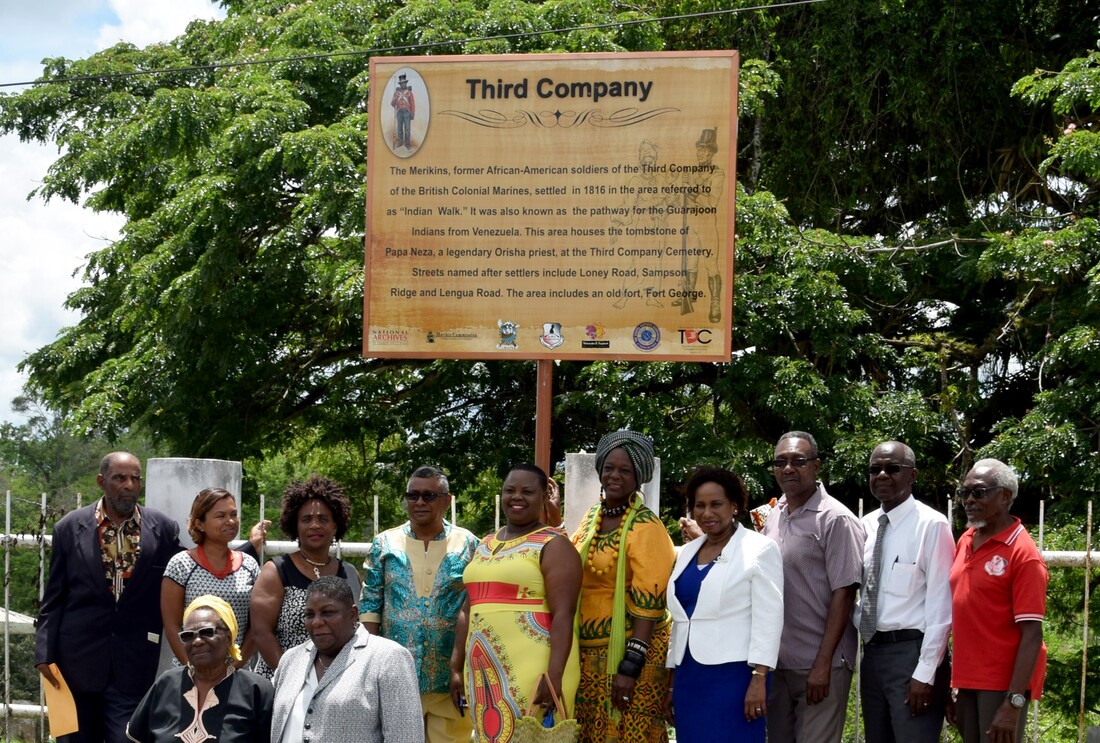
Many of the Merikins were baptists, bringing with them the religion which they practiced in several southern states of the U.S. Many historians believe the Baptist faith was brought to Trinidad by the Merikins. It was stated that “The American settlers brought with them the Baptist faith of the Second Great Awakening, and combined it with the Gullah culture from Georgia.” The Baptist faith was also reinforced by missionary work by Baptists from London who helped organize the construction of churches in the 1840s in Trinidad. The villages had pastors and other religious elders as authority figures. African traditions were influential too and these included the gayap system of communal help, herbal medicine, and Obeah – African tribal science. The Spiritual Baptist faith is also a legacy of the Merikin community. A prominent elder of the community in the 20th century was “Papa Neezer” who was renowned for his ability to heal and cast out evil spirits. His syncretic form of religion included veneration of Shango, prophecies from the “Obee seed” and revelation from the Psalms. He was largely responsible for bringing African and Orisha worship to his village.

It is sometimes said that the term “Merikins” derived from the local patois, but as many Americans have long been in the habit of dropping the initial “A” it seems more likely that the new settlers brought that pronunciation with them from the United States. In modern day, some of the Company villages and land grants established back then still exist in Trinidad today.

Isn’t it refreshing to learn of a positive story of freedmen who were able to settle into a life more or less uninterrupted by outsiders, in a land similar to their original motherland without the fear of “unsettling” change like in Seneca Village (in my previous post) where the government used their law of eminent domain to unsettle a promising community? The story is usually always about a growing black community that has some life-shattering interruption that has forced the community to disappear or relocate unannounced. For once we have a promising story of fulfillment in the need for a race of people to live life like normal citizens.
I am so happy to now know of a story about freed slaves with a good ending – long term! This story also makes me even more proud to trace my ancestral roots to Trinidad and Tobago, even if it was because “they” were trying to inhabit an island that at the time was struggling with emigration. To further note, an accent does not indicate the origin of a person. You will never know until you ask or do your research!
Sources:
 Untold Stories of Histories Past
I enjoyed this very factual history of the Merikins of Trinidad.🙏🏾
LikeLike