
During the civil rights movement, many black male leaders took a lot of credit for defending the rights of Black Americans, but the lesser celebrated black woman also held a torch in the fight. In our modern-day like in the past, police brutality and the silent majority still exists. Black men and women are unnecessarily killed because they simply were at the wrong place at the wrong time. Most will complain that these individuals could have handled the police better, but being the devil’s advocate here, would it really matter if they handled the situation differently dealing with a police organization which was originated with the sole purpose of catching black slaves? Because of the recent unlawful shooting of Jacob Blake and the continued lack of movement in the arrest of Breonna Taylor’s killers, I would like to get into the untold history of a real-life revolutionary, Assata Shakur.
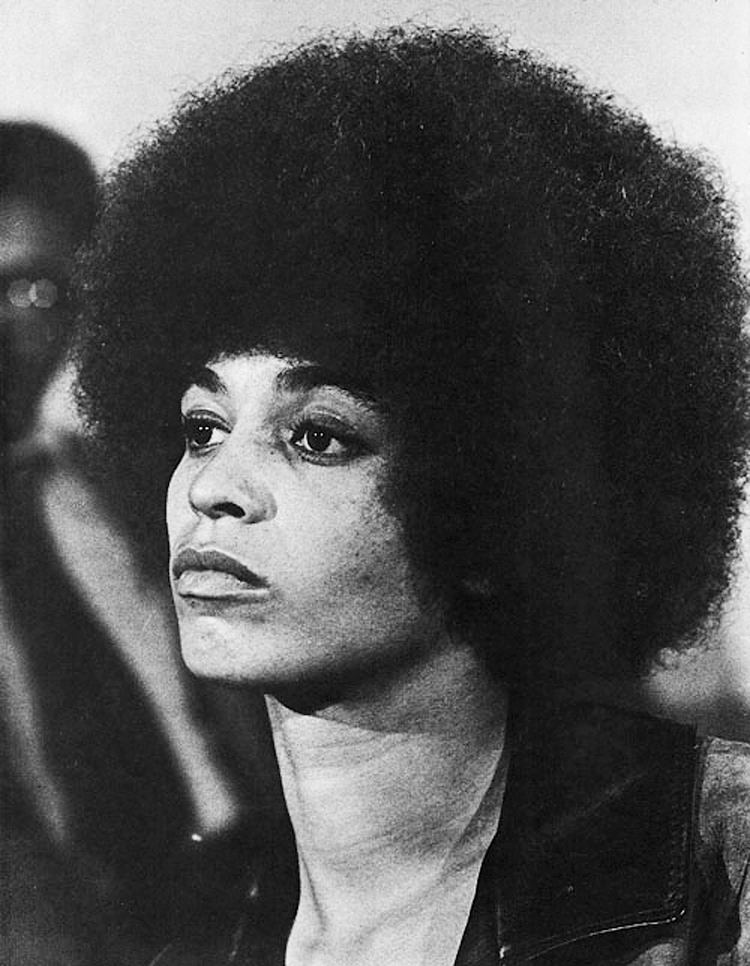
Assata Shakur was born Joanne Deborah Byron in Queens, NY on July 16, 1947. In 1950, her parents divorced and she was sent to live with her grandparents in North Carolina. After elementary school, she moved back to Queens to be with her mother and stepfather. Her parents constantly argued and struggled financially, therefore Shakur barely stayed at home. Her mother’s sister, Evelyn Williams, decided to take her in as Shakur was struggling with direction in her life. Her aunt was a civil rights worker who lived in Manhattan, NY. Her aunt became Shakur’s heroine in life, as she was introduced to new things like museums, theaters, and art galleries. Assata was a student at a Catholic all-girls high school for six months until she transferred to a public high school, later dropping out. With her aunt’s help, she earned her GED, noting that her class had no other black students and when she answered questions was not expected to know answers and was taught a “sugar-coated” version of history. In her autobiography, she later wrote: “I didn’t know what a fool they had made out of me until I grew up and started to read real history”
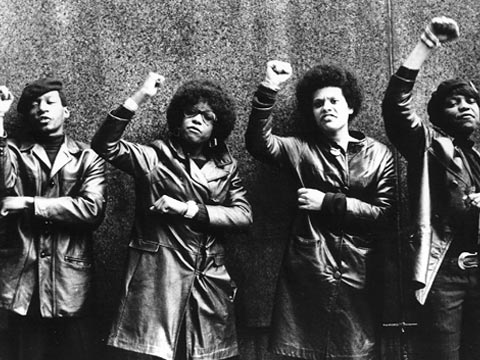
Shakur attended Borough of Manhattan Community College and later the City College of New York where she participated in many political activities, protests, and sit-ins. She was arrested for the first time—with 100 other students on charges of trespassing. The students had chained and locked the entrance to a college building to protest low numbers of black faculty and the absence of a black studies program. Shakur married Louis Chesimard, a fellow student-activist at City College, but divorced a year later, due to disagreements on gender roles. After graduating from City College she moved to Oakland, California where she joined the Black Panther Party. Shakur worked with the Black Panther Party to organize protests and community education programs. Shakur eventually moved back to NY where she led the BPP chapter in Harlem. She soon left the party, disliking the macho behavior of the men and believing that the BPP lacked knowledge and understanding of United States black history. Shakur then joined the Black Liberation Army (BLA), an offshoot of the BPP whose members led a campaign of guerilla activities against the U.S. government using tactics such as planting bombs, holding up banks, murdering drug dealers and police. In 1971, she decided to change her name to Assata Olugbala Shakur. Assata is a West African name, derived from the Arabic name Aisha, said to mean “she who struggles”, while Shakur means “the thankful one” in Arabic. Olugbala means “savior” in Yoruba. Referring to her name change she said “I didn’t feel like no Joanne, or no negro, or no amerikan. I felt like an African woman”.

The year 1971 would be the year that catapulted Shakur to fame or infamy for some. In April 1971, Shakur knocked on the door of a guest’s room, asking “Is there a party going on here?” then displayed a revolver and demanded money. She was shot in the stomach during a struggle with the guest who answered the door. Shakur later confirmed there was a drug connection to the incident. She was booked on charges of attempted robbery, felonious assault, reckless endangerment, and possession of a deadly weapon, then released on bail. Shakur is alleged to have said that she was glad that she had been shot because she was no longer afraid to be shot again. Then in August of the same year, Shakur was questioned for a bank robbery in Queens. A photo describing her likeness was later posted in banks around the city. The New York Clearing House Association paid for full-page ads displaying material about Shakur. Then in December 1971, Shakur was named by the NY police as one of four suspects in a hand grenade attack that destroyed a police car and injured two officers in Maspeth, Queens; a 13-state alarm was issued three days after the attack.
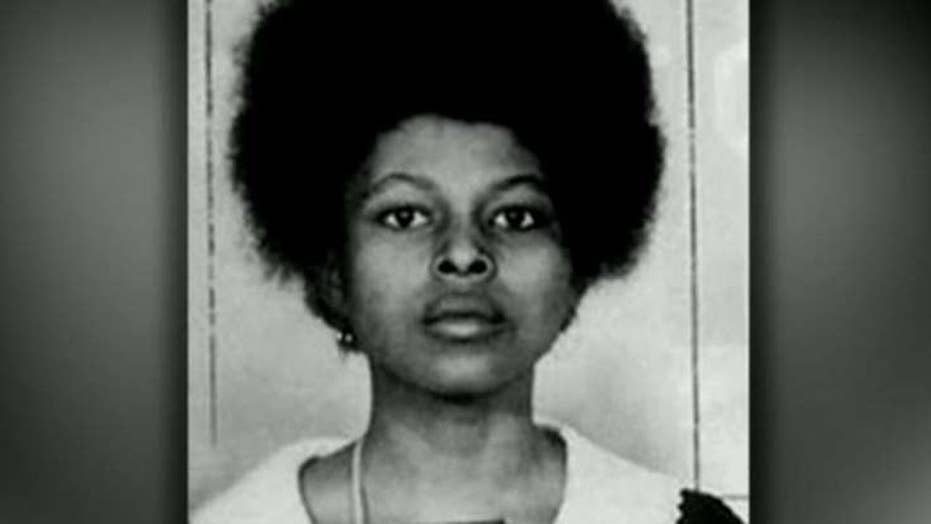
Again Shakur was questioned about the wounding of a police officer who attempted to serve a traffic summons in Brooklyn on January 26, 1972. After an $89,000 Brooklyn bank robbery on March 1, 1972, a Daily News headline asked: “Was that JoAnne?”; Shakur was also wanted for questioning after a September 1, 1972, Bronx bank robbery. Based on FBI photographs, Monsignor John Powis alleged that Shakur was involved in an armed robbery at Our Lady of the Presentation Church in Brownsville, Brooklyn, on September 14, 1972. Shakur became the subject of a nationwide manhunt after the FBI alleged that she led a Black Liberation Army cell that had conducted a “series of cold-blooded murders of New York City police officers”. When later asked about BLA’s alleged involvement in the killings of police officers, Shakur responded that “There were people who absolutely took the position that it was just time to resist, and if black people didn’t start to fight back against police brutality and didn’t start to wage armed resistance, we would be annihilated.”
Robert Daley, Deputy Commissioner of the New York City Police described Shakur as “the final wanted fugitive, the soul of the gang, the mother hen who kept them together, kept them moving, kept them shooting”. Years later, some police officers argued that her importance in the BLA had been exaggerated by the police, with one saying that they themselves had created a “myth” to “demonize” Shakur because she was “educated”, “young and pretty”.
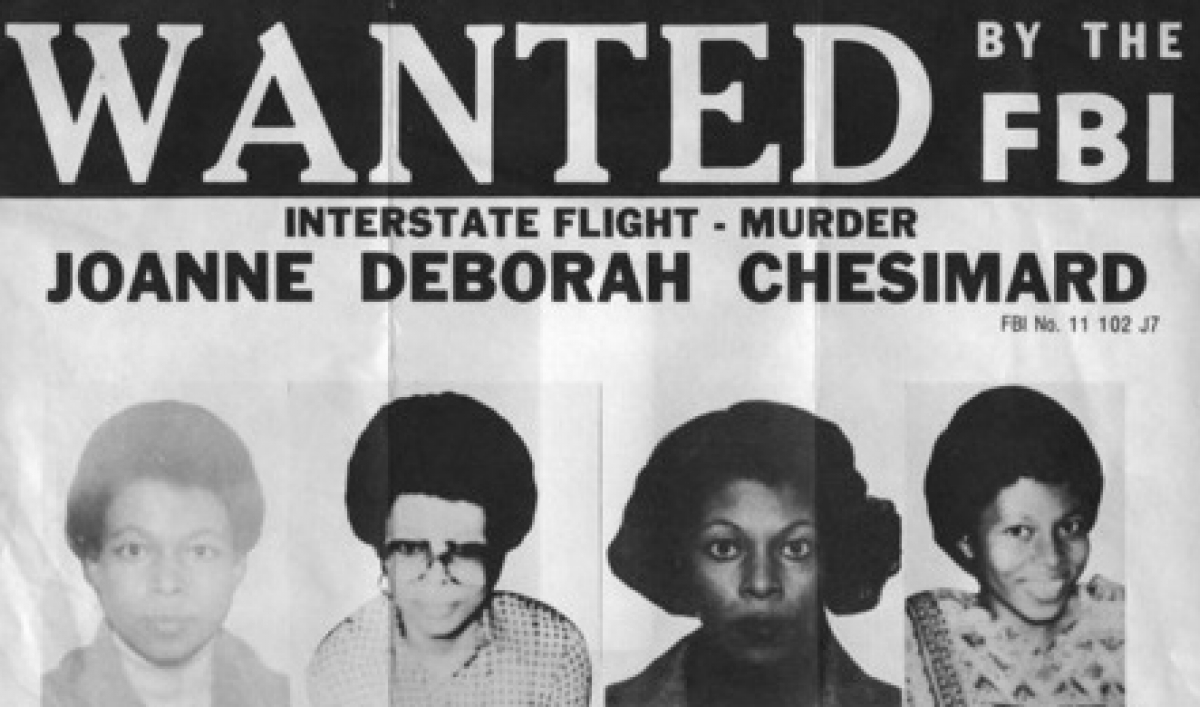
An apparatus that would become the FBI’s Joint Terrorism Task Force (JTTF) was issuing nearly daily briefings on Shakur’s status and the allegations against her. Shakur and others claim that she was targeted by the FBI’s COINTELPRO as a result of her involvement with the black liberation organizations. Specifically, documentary evidence suggests that Shakur was targeted by an investigation named CHESROB (Ches from her last name and Rob for the robberies she was claimed to have done), which “attempted to hook former New York Panther Joanne Chesimard (Assata Shakur) to virtually every bank robbery or violent crime involving a black woman on the East Coast”.

Then one faithful night in May of 1973 at 12:45 am, Assata Shakur, Zayd Shakur, and Sundiata Acoli were stopped on the New Jersey Turnpike for a broken tail light. They were stopped by two state troopers, Foerster and Harper. Foerster asked the driver (Acoli) for identification and noticed a discrepancy, requesting that the Acoli get out the car and questioned him at the rear of the vehicle. The questioning took a turn for the worst when a shootout ensued. After injuring the troopers, Acoli and the two others escaped, driving 5 miles down the road while being chased by three patrol cars. At the end of the shootout, Trooper Foerster was shot twice in the head and killed, Zayd Shakur was killed, and Assata Shakur and Trooper Harper were wounded. When Acoli stopped the vehicle he escaped into the woods but was later captured after a 36-hour manhunt. Assata Shakur surrendered with her arms up. Zayd Shakur’s body was found in a nearby ditch along the road.
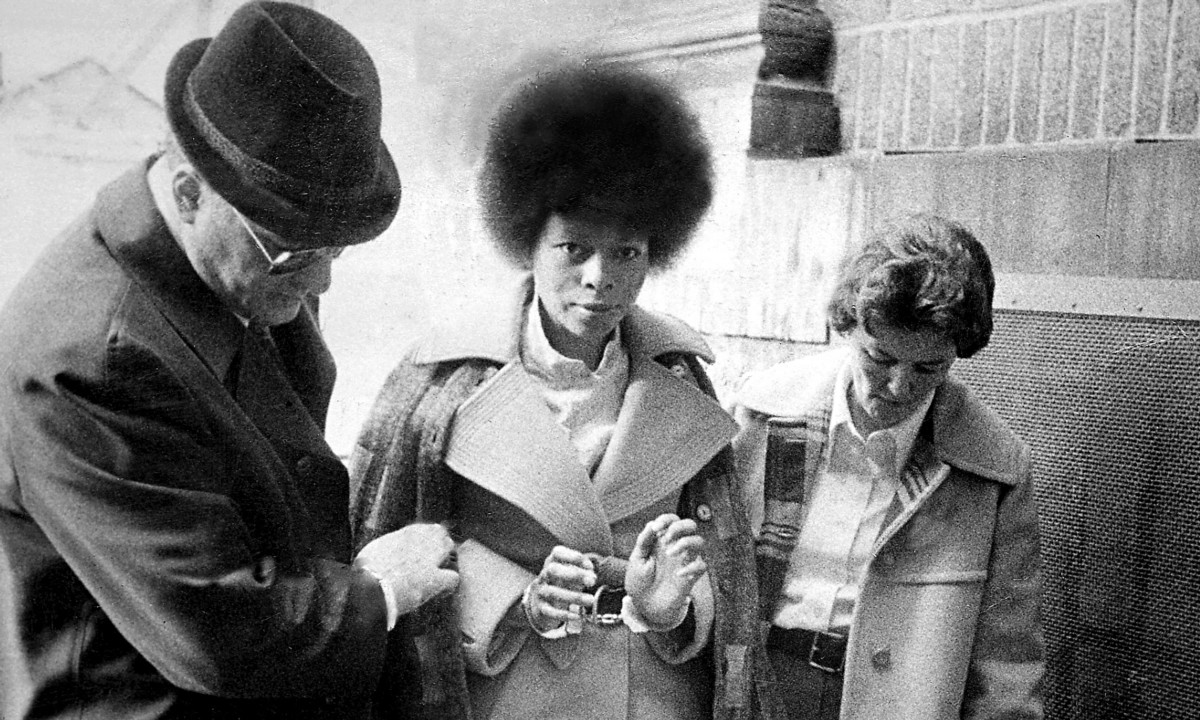
According to a New Jersey Police, when the trio was stopped on the turnpike, Shakur was heading ultimately for Washington to hit potential BLA targets. Shakur testified that she was on her way to Baltimore for a job as a bar waitress. Shakur, with gunshot wounds in both arms and a shoulder, was moved to Middlesex General Hospital under “heavy guard” and was reported to be in “serious condition”. Shakur was interrogated and arraigned from her hospital bed, and her medical care was substandard. In a later interview, Shakur stated that the police were beating and choking her and “doing everything that they could possibly do as soon as the doctors or nurses would go outside”. After leaving the hospital, Shakur was mostly held at Rikers Island Correctional Institution for Women in New York City where she was kept in solitary confinement for 21 months. Shakur’s only daughter, Kakuya Shakur, was conceived during her trial and born on September 11, 1974, in the “fortified psychiatric ward” at Elmhurst General Hospital in Queens, NY before returning back to Rikers Island.
Between 1973 and 1977, in New York and New Jersey, Shakur was indicted ten times, resulting in seven different criminal trials. Of these trials, three resulted in acquittals, one in a hung jury, one in a change of venue, one in a mistrial due to pregnancy, and one in a conviction; three indictments were dismissed without trial. The shootout retrial would receive the most attention in 1977. It was widely publicized and even was reported in the Soviet Union. Hundreds of civil rights campaigners protested outside the courthouse every day. Shakur had ten defense attorneys, one being her heroine aunt, Evelyn Williams.
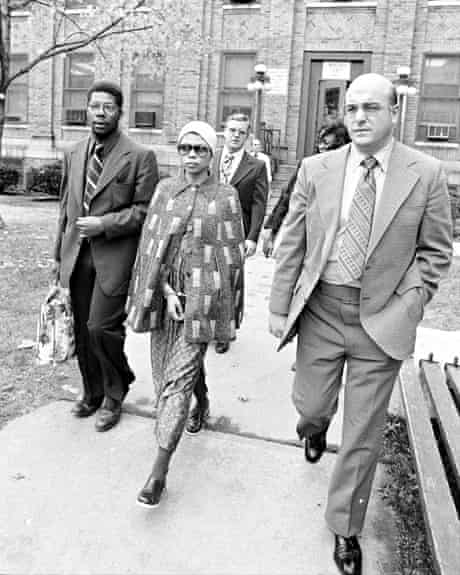
Her attorneys, in particular Lennox Hinds, were often held in contempt of court, which the National Conference of Black Lawyers cited as an example of systemic bias in the judicial system. The New Jersey Legal Ethics Committee also investigated complaints against Hinds for comparing Shakur’s murder trial to “legalized lynching” undertaken by a “kangaroo court“. Until obtaining a court order, her aunt Evelyn Williams was forced to strip naked and undergo a body search before each visit with Shakur—during which Shakur was shackled to a bed by both ankles. In addition, there was a burglary at her defense counsel’s office that resulted in the disappearance of trial documents, amounting to half of the legal papers related to her case. Her lawyers also claimed that their offices were bugged.
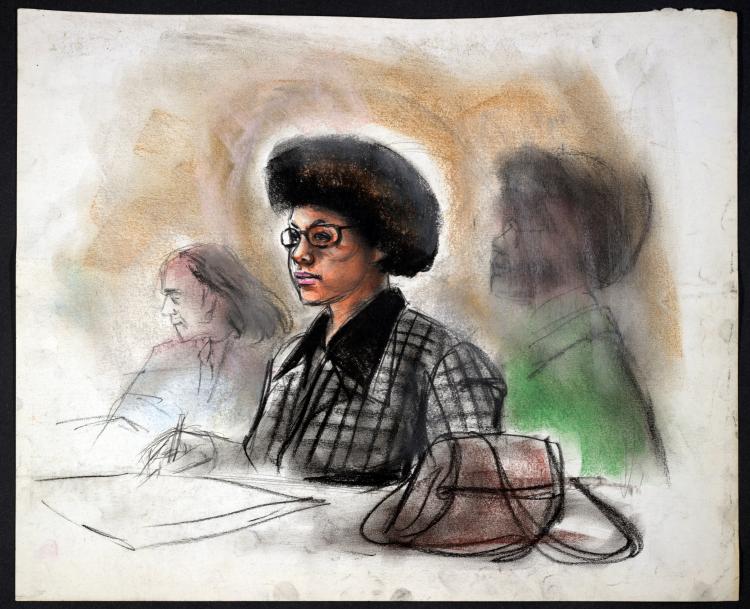
All of the 15 jurors—ten women and five men—were white, and most were under thirty years old. Five jurors had personal ties to State Troopers (one girlfriend, two nephews, and two friends). Additionally, Willaim Kunstler, Shakur’s lead defense attorney, alleged that he later learned from law enforcement that a New Jersey State Assembly Member had addressed the jury at the hotel where they were sequestered, urging them to convict Shakur. Shakur was convicted on all eight counts: two murder charges, and six assault charges. Upon hearing the verdict, Shakur said—in a “barely audible voice”—that she was “ashamed that I have even taken part in this trial” and that the jury was “racist” and had “convicted a woman with her hands up”. At Shakur’s sentencing hearing Shakur was sentenced to 26 to 33 years in state prison. To become eligible for parole, Shakur would have had to serve a minimum of 25 years, which would have included her four years in custody during the trials.
She was then moved to Alderson Federal Prison Camp in West Virginia in 1978 where she met Puerto Rican nationalist Lolita Lebrón and Mary Alice, a Catholic nun, who introduced Shakur to the concept of liberation theology. At Alderson, Shakur was housed in the Maximum Security Unit, which also contained several members of the Aryan Sisterhood as well as Sandra Good and Lynette “Squeaky” Fromme, followers of Charles Manson. When the Alderson Maximum Security Unit was closed, Shakur was moved to Clinton Correctional Facility for Women where she would endure vaginal and anal searches on camera.
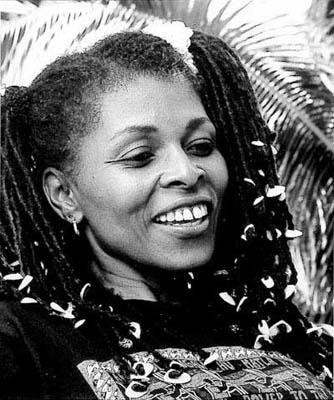
In early 1979, “the Family”, a group of BLA members, began to plan Shakur’s escape from prison. On November 2, 1979, Shakur escaped the Clinton Correctional Facility for Women, when three members of the Black Liberation Army visiting her drew concealed .45-caliber pistols and a stick of dynamite, seized two correction officers as hostages, commandeered a van and escaped. Shakur lived in Pittsburgh until August 1980, when she flew to the Bahamas. After her escape, Shakur lived as a fugitive for several years. The FBI circulated wanted posters throughout the New York-New Jersey area; her supporters hung “Assata Shakur is Welcome Here” posters in response. In New York, three days after her escape, more than 5,000 demonstrators organized by the National Black Human Rights Coalition carried signs with the same slogan. At the rally, a statement from Shakur was circulated condemning U.S. prison conditions and calling for an independent “New Afrikan” state. For years after Shakur’s escape, the movements, activities, and phone calls of her friends and relatives—including her daughter —were monitored by investigators in an attempt to ascertain her whereabouts. FBI director William Webster said that the search for Shakur had been frustrated by residents’ refusal to cooperate.

By 1984, Shakur had reappeared in Cuba; in that year she was granted political asylum there. The Cuban government paid approximately $13 a day toward her living expenses. In 1985, her daughter, Kakuya, who had been raised by Shakur’s mother in New York, came to live with her. In an open letter, Shakur called Cuba “One of the Largest, Most Resistant and Most Courageous Palenques (Maroon Camps) that has ever existed on the Face of this Planet”. She praised Fidel Castro as a “hero of the oppressed” and referred to herself as a “20th century escaped slave”. Shakur is also known to have worked as an English-language editor for Radio Havana Cuba. In 1987, she published Assata: An Autobiography, which was written in Cuba. In 1993, she published a second book, Still Black, Still Strong. In 1997, Carl Williams, the superintendent of the New Jersey State Police, wrote a letter to Pope John Paul II asking him to raise the issue of Shakur’s extradition during his talks with President Fidel Castro. Nothing came of that except for an interview that Shakur did with NBC News. On March 10, 1998, New Jersey Governor Christine Todd Whitman asked Attorney General Janet Reno to do whatever it would take to return Shakur from Cuba. Later in 1998, U.S. media widely reported claims that the United States State Department had offered to lift the Cuban embargo in exchange for the return of 90 U.S. fugitives, including Shakur.
The U.S. Congress passed a non-binding resolution in September 1998, asking Cuba for the return of Shakur as well as 90 fugitives believed by Congress to be residing in Cuba; House Concurrent Resolution 254 passed 371–0 in the House and by unanimous consent in the Senate. In an open letter to Castro, chair of the Congressional Black Caucus Representative Maxine Waters (Auntie Maxine) of California later explained that many members of the Caucus (including herself) were against Shakur’s extradition but had mistakenly voted for the bill, which was placed on the accelerated suspension calendar, generally reserved for non-controversial legislation. In the letter, Waters explained her opposition, calling COINTELPRO “illegal, clandestine political persecution”.

On May 2, 2005, the 32nd anniversary of the Turnpike shootings, the FBI classified Shakur as a domestic terrorist, increasing the reward for assistance in her capture to $1 million, the largest reward placed on an individual in the history of New Jersey. The bounty announcement reportedly caused Shakur to “drop out of sight” after having previously lived relatively openly. In a May 2005 television address, Castro had called Shakur a victim of racial persecution, saying “they wanted to portray her as a terrorist, something that was an injustice, a brutality, an infamous lie.” In 2013, the FBI announced it had added Shakur to its list of ‘most wanted terrorists’, the first time that a woman was so designated. The reward for her capture and return was also doubled to $2 million.

In June 2017, President Donald Trump gave a speech “canceling” the Cuban thaw (loosening of) policies of his predecessor Barack Obama. According to Trump a condition of making a new deal between the United States and Cuba would be the release of political prisoners and the return of fugitives from justice. Trump specifically called for the return of “the cop-killer Joanne Chesimard”.
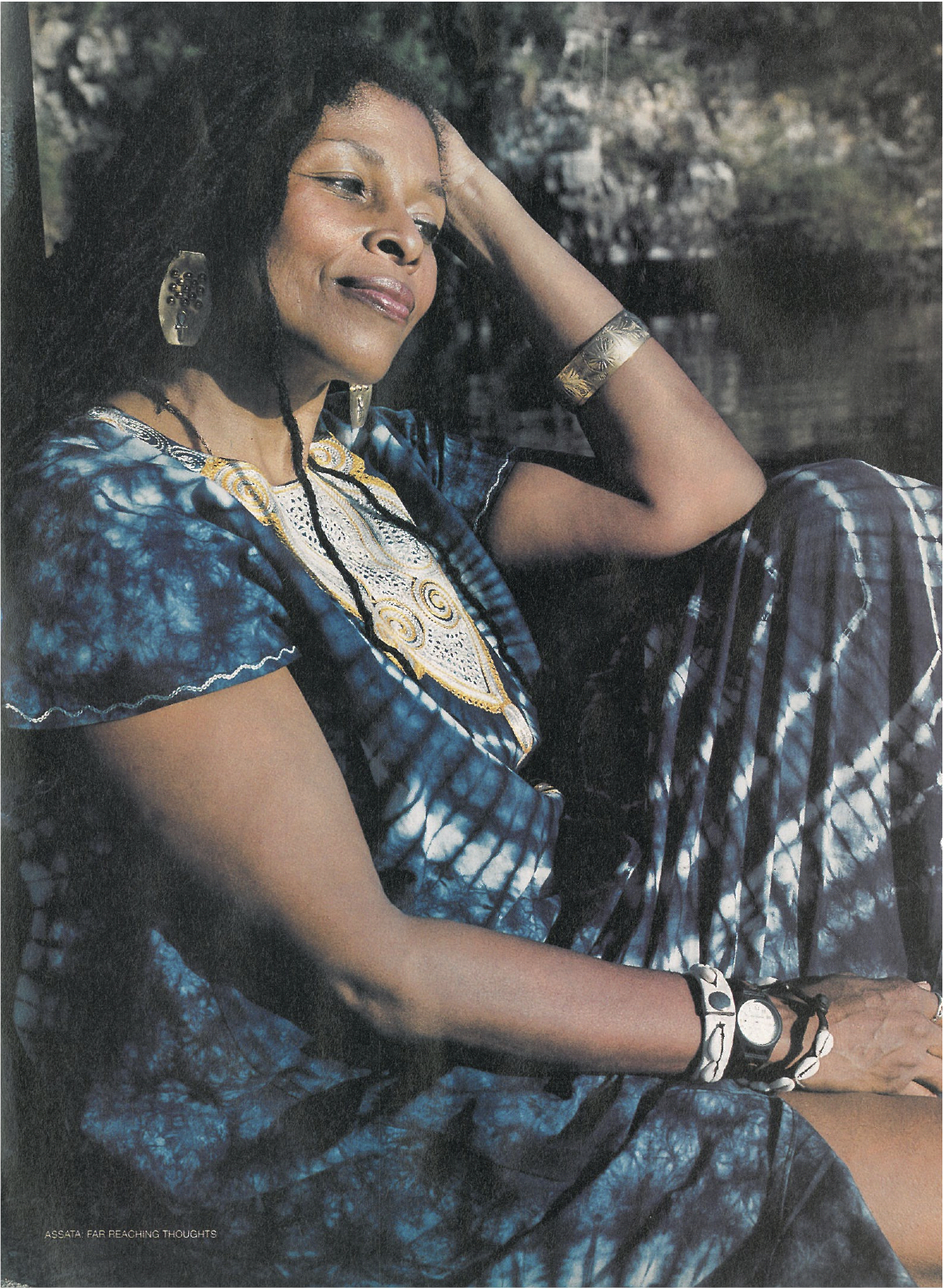
So after learning about Assata Shakur, what are your thoughts? As a black woman revolutionary, I would say that she truly was a moving force that put action to her words. This is something that many people lack. At least she did what she thought would help Black Americans get the justice they deserved instead of just flap her gums. She may have been extreme, but extreme gets the immediate attention of others in a room. I think in order for Black Americans to get justice it takes both brains and physical strength. At a lower level, physical strength can prove as a weapon that will bring attention, whilst brains will be required at a higher level to get new policies and laws passed – also to defeat cunningness. Not everyone can be a revolutionary and not all folk are kinfolk. So take this story with a grain of thought and think about what Assata Shakur gave up to do what she thought was necessary and how you can make a difference to finally bring justice to a people that were always considered the afterthought or lesser than.
Source:
https://en.wikipedia.org/wiki/Assata_Shakur
Books:
https://www.thriftbooks.com/a/assata-shakur/201881/
 Untold Stories of Histories Past