
Plainly named “The Cotton Engine”, the cotton gin would become the technology that extended the institution of slavery in America for almost a century after the American Revolution.
Yes, every blog entry I have written since the end of May has been about slavery but in the current climate that we are living in, how could I not? At first, I thought this week I would talk about Juneteenth but that would be expected, so I am giving you knowledge outside of the expected. For those who are unaware of what Juneteenth is, just for acknowledgment sake, it was the day in which the last blacks in the country were formerly freed from enslavement – 30 months later, nearly 2.5 years after slavery was abolished. It is known in the black community as our independence day, not July 4th which celebrates the independence from colonialism but not independence from our oppressors of servitude who brought us unwillingly across the ocean to perform unpaid labor at the cost of greed and power.
After the 13 original colonies won their independence, the founding fathers developed the laws for the new land that they would call their own, better known as the Constitution – the official law of the land. It declared all citizens were free. Citizens did not come to mean slaves as well. Unfortunately, the peculiar institution (aka American slavery) did not allow for slaves to be freed, as most landowners were fervently opposed to the idea – how could they manage without their slaves?? BUT, how could a nation built on freedom for all, still have slavery? For years after independence the powers that be considered also freeing the slaves but the invention of the cotton gin, quickly removed that consideration off the table until almost 100 years later – when the economics became a threat to the sustainment of the nation financially.
In 1793 the cotton gin was invented. The cotton gin cleaned cotton by separating the fiber from the seeds, a task that originally took slaves several hours to do. Therefore, the gin increased productivity and created a cotton surplus in the country, allowing America to meet the demand of cotton plus more in the old world; cotton no longer was a luxury good. This changed transformed the southern economy and the number of slaves in the south multiplied to support the increased need for workers to process the cotton surplus. The number of slaves went from about 700k to 1.2 million, a 70% increase. As cotton became an everyday good, new western territories became cotton lands. By 1830, more than half of the North American continent had cotton fields. In 10 years, U.S. produced cotton went from a value of 150k to 8 million!! Cotton became the basis for the growing textile industry in the north. Of course for the textile industry to exist, there must be factories to create the textiles. The industrial revolution in America was born.
Most know about the exodus of ex-slaves to the north in the “Great Migration”. But even before then there was a great migration in the opposite direction to the south and the west because, Cotton. Around 100k slaves were relocated from the north to the south and west each decade, around half a million. A lot of slaves were sold to cotton landowners by former tobacco landowners whose crop was no longer profitable. The slaves would have to march, shackled from one plantation to another for miles and miles. This selling of slaves once again created the black family divide, after their shared forced exodus from Africa. Africans were taken from Africa in droves – in 1803 alone, 20k slaves arrived in South Carolina and Georgia.
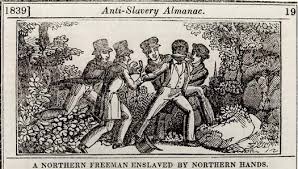
Even freed blacks in the north were in danger of being captured by slave masters, enslaving them to feed the cotton boom in the south. Some were born freed, others were not. Former slaves who escaped to freedom were captured and re-enslaved. Slave owners did this by paying bounties and hiring slave catchers. These would be the same slave catchers that would come to be our modern-day police force. Sadly, children were the most at risk because if they were captured as a child, as they grew older, their features would change and by the time of adulthood would be unrecognizable, never being found by their freed families in the north.
It baffles me that something as soft and pure as cotton could be the crop that changed the world for the worse, becoming something that could bring about a hard life and sullied existence. Slavery had existed for centuries before, but because of greed and power, a simple good was used as a pawn in the game to gain wealth. It is similar to the billionaires that exist today in our country. Billionaires must step on the toes of others to get to the top. There is no way to play a fair game in the race to the top. Yes, slavery was the result of the billionaires game, but not all slaves were treated equally. If you want a subservient slave class, treat all races of slaves the same. Unfortunately, that was never the case in the United States and the modern system we Americans live under was built off of this unbalanced treatment which continues today, and ever so greatly with one race, the black race.
P.S. I have added a “Good Reads” page on my main blog page with all the books that have been inspiring to me thus far. Trust, the list will continue to grow. Check it out!
Sources:
 Untold Stories of Histories Past